
1967-1974: Steve Lacy Solo and Ensemble Works

There’s a famous adage in jazz that soprano saxophonist Steve Lacy (1934-2004) thought Thelonious Monk’s music was a “door to the other side,” which meant, for him, a transition from Dixieland into free improvisation by the mid-60s, later introducing a range of his own idiosyncratic compositional devices. In a sense, Lacy developed a sound world that his compatriots and followers have had to work through in much the same way as he did with Monk. And while Lacy was incredibly prolific during his lifetime, the last several years have uncovered a tremendous amount of previously unheard (or at least very rare) recordings. This year has already seen four important discs’ worth of Lacy’s music – in addition to the two on UK label Emanem I’ll discuss here, there’s a pair of great reissues on Portuguese imprint Clean Feed (Esthilaços, 1972) and Unseen Worlds (agitprop chanteuse Maria Monti’s Il Bestario, 1975).

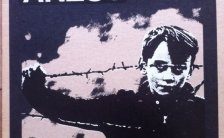
Emanem started in 1972 with an LP of Lacy’s first solo concert at the Théâtre du Chene Noir in Avignon, released as Steve Lacy Solo with (in my opinion) one of the most beautiful-looking album covers in jazz. It was reissued once before as Weal and Woe with quintet material added (The Woe); the all-solo Avignon and After vol. 1 consists of selections from the Avignon concert and five tracks from a 1974 Berlin performance. Not all solo saxophone concerts capture the feel of improvising without a net in the way that these Lacy documents do, presenting the saxophonist in full chirp-and-quack mode, in a struggle to create both compelling tunes and an involving, reflective environment from sonic kernels and referential phrases. What’s immediately surprising from the first moments of “The Breath” is that, unaccompanied, Lacy’s kinetic force is just as remarkable as his tone and improvisational choices. He takes a singsong, folksy melody and tears into it with resources that alternately express the “quaintness” of the theme and go well beyond it (a la Albert Ayler). The chance piece “Stations” finds Lacy improvising along with a radio tuned to some sort of lieder; rather than background, an intense dialogic push-pull is the result. The pretty “Josephine” begins with a spare clamber, moving to almost inaudible puckering noises and then an easy swing. While less cleanly recorded than the Avignon concert, the Berlin pieces are just as rugged (if not moreso by dint of their “rawness”), including particularly choice readings of “The Owl” and “Torments.” There’s a lot of solo Lacy available, but this set is indispensable.

The Sun is a compilation based around Lacy’s anti-Vietnam War music, created with his longtime partner, Swiss-born vocalist Irene Aebi. Some of the material here was issued before – four parts of The Woe and a short set of improvisations on The Way, with electronic artist Richard Teitelbaum – though much of it is rare and archival. “Chinese Food” is the most storied of the pieces here; it was recorded in New York in 1967 and finds Aebi reading (and hurling) anti-war texts from Lao Tzu against Teitelbaum’s unhinged, patchwork live electronics and Lacy’s screams and sideways twirls. Buckminster Fuller’s texts are used as the springboard for the title piece, recorded in 1968 with Aebi, Lacy, trumpeter Enrico Rava, vibraphonist Karl Berger, drummer Aldo Romano, and bassist Kent Carter (all favored collaborators from 1965 onward). Tart horn lines move in a gooey orbit with free percussive chatter and Berger’s ringing, monolithic chords. Aebi is often described as an acquired taste – indeed, her approach to reciting/singing is a cross between lieder and a distinctly European declamation – but in the context of weighty, far-out protest music, she is a perfectly-applied element. The four parts of The Woe are a prime example of Lacy’s working group of the mid-70s with Aebi, Carter, saxophonist Steve Potts, and drummer Oliver Johnson. On “The Wage,” live cassette recordings of artillery fire are thrown into the mix as well as the ensemble’s vocal shouts, driving an already potent hardcore free-jazz unit into a timely stratosphere. While protest art can be hard to unravel from its immediate context, the state of perpetual strife we live in serves as a regular enough background to this music that its political impact isn’t lessened.

1969: Damon - “Song Of A Gypsy”

When they teamed up to record Song Of A Gypsy, Damon Del Conte and collaborator Charlie Carey were already veterans of the 1960s Los Angeles music scene. For a few years, Damon had pursued a career as a Byrds-y folk-rock singer-songwriter, releasing a few 45s as Damon Lane on his own Del Con imprint. Damon met up with Charlie and a few additional session players in 1969, and together they created one of the most legendary, collectible psych-rock LPs of all time. It was issued in a tiny private press edition of 100 copies, and these days a mint copy goes for up to $3,500 on the rare psych market. It’s not just the scarcity of the Damon album that makes it desirable; it’s a genuinely stunning artifact of the late 60s underground. Combining Carey’s deeply lysergic fuzz guitar with Damon’s acoustic strumming and delicious baritone croon, the album is marked by a near-flawless execution. Damon plays up his self-styled “gypsy” persona throughout, delivering a suite of Eastern-inflected pop songs that often evoke a melancholy doom. The album was recorded and mixed in such a pristine manner that it’s hard to believe it was a self-financed vanity project. Every song is good, but the opening title track really sets the tone, with its melodramatic, fatalistic rhymes: “Today I feel like crying/ Today I feel like dying/ Today I feel like nothing is real/ And the world can’t see I’m trying.”

The album has been reissued bootleg-style by several fly-by-night European labels over the years, and once on CD by Damon himself, who recorded a follow-up in 1998 entitled Gypsy Eyes, about which the less said the better. Damon and Charlie still team up for live performances now and then, but it’s hard to imagine them reigniting the fire of those 1969 sessions with their gorgeous jangly fuzz-bombs of dark Orientalist folk and apocalyptic heralding.

1970: Akira Miyazawa Quartet - “Asama”

In a recent Q&A on reddit, someone asked Steve Albini why he didn’t like jazz music.

“Because it sucks and I’m tired of hearing about it. Believe me I’ve tried. I just hate the parts I hate about it more than I like the little things there are to like. The batting average is just so low I can’t bear the dead time between highlights being filled with all that noodling. It’s vain music.”

Damn!

Of course, I can sorta understand the impulse behind his reaction to a lot of jazz. If above all else you value compositional structure in music, so much “noodling” could be a big turnoff. Eitherway, Albini’s assessment immediately made me question what I valued most in jazz music, so I turned to some beloved tracks to help me figure it out. Going through my ‘favorites’ playlist on YouTube, I was pleasantly reminded of “Asama,” an early-70s flash of manic but syrupy free-jazz from the Akira Miyazawa Quartet.

I guess the track has a lot of “in-between noodling” — it begins with a beautiful, almost Dave Brubeck-esque theme, backed by a droning string sound, before plummeting into a more chaotic and free approach to soloing. What is there to value here? For one — as if I even have to say it — the energy! How the drums would seem batshit crazy taken alone, but in the context of the song glue everything together through intense, driving interplay. It creates a continuously evolving suspense that is never truly satisfied. But that’s the joy of it all, to me — those “in-between” moments that make you question how it’s all held together.

“Asama” doesn’t feel overtly academic or showoff-ish. It’s more about capturing lightning in a bottle, finding excitement in the ephemera of performance and interaction. You could argue the same spirit resides in most visceral, thrilling music.

1974: Charlemagne Palestine - Four Manifestations on Six Elements

For aficionados of the modern minimalist movement, a small handful of works have achieved mythic status, often warping their creators into mysterious, nearly other worldly gurus of drone. The Black Record by La Monte Young comes to mind, as does Terry Riley’s A Rainbow in Curved Air, Steve Reich’s Music for 18 Musicians, and possibly Philip Glass’s Einstein on the Beach. Each of these works, with the exception of La Monte Young, who is an enigma of his own, has maintained a powerful intrigue for new listeners. I think it’s because they are often juxtaposed with epic scenery or movie trailers – if you ever see a cool picture, chances are some Philip Glass song in the background could probably make it more awesome that it was before. But part of the problem that comes with having three or four titans of minimalism is that lesser known artists like Phil Niblock or Charlemagne Palestine are often removed from the conversation, if only because they aren’t as immediately accessible as some of their contemporaries.

It’s unfortunate that this is the case, because albums like Palestine’s Four Manifestations on Six Elements deserve to be both remembered and praised as incredible contributions to minimalism and experimental music. Palestine’s music is about as minimal as it gets; often employing nothing but a single piano, it somehow manages to sound full and massive through all his extended pieces. Patterns, which sometimes consist of only two or three notes, are repeatedly endlessly and slowly expanded into larger tone clusters as Palestine coaxes all manner of unusual timbres out of his instrument. Unlike Philip Glass or Steve Reich, who usually compose in relatively simple patterns but perform with large ensembles to flesh out their music, Palestine’s early work is all a one-man show which allows him an incredible amount of nuance and control. There is much beauty to be found in these simple keystrokes, something producers who just can’t resist adding an extra drum fill here or there should keep in mind more often.

1984: Silueta Pálida - Silueta Pálida 12”

In these times of globalization and blog saturation, we can hear music from all strains made all over the world and discover forgotten classic, local anthems, and records that barely got recognition past the block they were recorded on. Truly a wonderful time, but still, some patches of land have gone largely undocumented. I’m talking specifically about Mexico.

By the start of the 80s, Mexican bands either embraced the rupestre movement – folk songs about life in the city using low brow language – or went over to the electronic side. Along with Size, Syntoma, Artefacto, Casino Shangai, and Capitán Pijama, Decada 2 was one of the most prominent outfits of the era, embracing the industrial edge of international luminaries like Front 242 and Skinny Puppy. Before Decada 2, however, its leader Carlos García, along with Jaime Herranz and some friends, recorded a 12-inch EP under the name Silueta Pálida (Pale Silhouette). They described the EP as “techno pop,” though it had more to do with minimal wave artists like Linear Movement and Solid Space than anything too synth-poppy. The record was self-released on their own Discos A.E.I. and the artwork features cut out squares that turn black when you slide the record with its inner sleeve.

The music features plenty of synths, but also has a bunch of acoustic instruments like marimba, piano, guitar, and even drums played by a human, believe it or not. There’s a somber, gothic shadow over everything, but García’s lyrics are earnest, especially on the song that opens the set, “El paso del tiempo,” about returning to a simpler time in his childhood. That same song has a remix on the same side, showcasing some noise and rough editions to the instrumental take on the track. Another instrumental song, “Impensado,” is more introspective and softer and there’s percussion going on everywhere.

As surprising as it may seem, there’s still music yet to be discovered and reissued and, as this piece of vinyl proves, there’s some real gems, regardless of where they come from. And that, to me, is an exciting fact.

2002-2011: Malcolm Middleton

Malcolm Middleton was slow to become a comforting listening habit. I couldn’t really imagine a time when I wouldn’t find Arab Strap a gratingly relentless downer. That didn’t mean I didn’t absolutely respect Malcolm and the gang’s uncompromisingly miserable outlook. Think of that other Malcolm, Malcolm Tucker from the political satire “In the Loop.” The fact that he’s a bloodshot-eyed psycho, spasming with expletives – fuckity BYE – is applaudable, as he’s a Scotsman.

You may be aware that Scotland is quite far North. To me it’s perfectly understandable that Northerners would fight back against the misery of living through days of darkness and rain by adopting a hard-drinking, hard-ranting comic rage that would get them through the winter months. Having some eff and blind in you is a sign that you’re still fighting, which means at least that you’re not weeping in the corner.

As Morrissey once said of the British, “you wonder how we’ve survived so long.” Well, the answer is with a healthy dose of “Tourette’s”. I’m not talking about the real, often misunderstood syndrome, but the common idea of it which involves copious declamatory swearing.

Just for a second imagine the Malcolm Tucker endorsed “Tourette’s” as a cheap cigarette brand:

He handed me a pack of “Tourette’s” – you know, the kind that old people smoke, the kind that suddenly made you wonder if you’d become hoarse and terrifying like them one day.”

Right there you have my own interpretation of a typical lyric from the Middleton universe. And if you’re game you also have a mechanism for survival: paint yourself as black (or as nicotine colored) as your surroundings, with excessive declamatory swearing and abusive self-deprecation.

Over the course of the eight albums Middleton has released since Arab Strap – nearly as many as he has with them – he has been engaged in a seemingly inevitable verbal bar-fight with his darker side. Malcolm Middleton records are hardly less mellow than Arab Strap ones, but over time it seems this process of dissecting his own misery has made him less of a ranter and more of a metaphysical poet of life’s shoddier choices (chicken or beef; cigarettes or beer; hangover or depression). This struggle may seem self-absorbed, but it’s apparent that it breeds humor in titles like Mad for Sadness, A Quarter Past Shite, and “You’re Gonna Die Alone” (a breezy number). Middleton’s darkside is so prevalent that it’s become acceptable – just like the messy, grandiose flatmate who wanders in and out through a sitcom kitchen. Also mercifully for his audiences, in musical terms Middleton refuses to be just a miserable songwriter with a guitar. He can move between the sparest laments, upbeat rock, dancier moments, and haunting piano interludes.

I won’t lie, every time I switch on a Middleton album I still brace myself for a bleak listening experience akin to the type of sky you see over power plants. But each time, the slightly dampened mood is worth it for throwaway examples of miserablism like the following: “I can’t even cook a meal without falling into stress/ It only takes some pasta to remind me of the total depths of my unworthiness” (from Sleight of Heart). If you can find drama and humor in such moments, though you may feel a little cursed at times, you’ll never be bored, you’ll never be satisfied, and neither will your listeners. And that’s what a positive attitude is really: a strategy for keeping on keeping on, no matter how shite it gets.

1996: Flying Saucer Attack - In Search of Spaces

The name “Flying Saucer Attack” is loaded with signifiers of space. It’s something founder Dave Pearce often felt ire towards — sure, his music was laced with cresting waves of droning feedback and grainy atmosphere, but it didn’t often evoke thoughts of aimlessly traversing the universe so much as patiently admiring it from the ground. The vaguely pastoral elements of FSA’s sound suggest a more observant style of cosmic contemplation; one more content to figuratively sit upon a hill and watch the clouds be replaced with stars than to actually evoke psychedelic explorations, or anything not rooted somehow to the physical realm. This is partly why In Search of Spaces sounds comparatively more “otherworldly” than any of FSA’s studio records, though the literal hands of others also have much to do with this.

Seamlessly woven together by the Dead C’s Bruce Russell from a collection of audience-captured FSA live recordings, the unbroken fifty minutes of In Search of Spaces is as much the result of others as Pearce himself. This tapestry of live occurrences doesn’t present songs so much as the smeared accounts of live FSA sightings, abstracted by multiplicity yet given a sense of focus by Russell’s tape arrangements. Though largely characterized by the blurring of drones and ever-present feedback, vaguely guiding beacons of sound emerge from the dense fog of tape hiss — sounds like unrecognizable snippets of voice, occasional drums that fade in and out of audibility, and guitar feedback emanating as if it were bellowed from the depths of a cave. The overall effect is not unlike coming across a dossier of damaged recollections, which tempts me to link In Search of Spaces to the Flying Saucer Attack name in the sense of UFO sightings — that is, abstracted by the vague subjectivity of multiple sources without an objective or empirical standard of comparison. And with each source recalling live occurrences with degraded memory, the collage of In Search of Spaces could be approached as the FSA experience documented from a fragmented other, as blurred and intangible as the sightings one might associate with the project’s name.

1975: Ghanaian Postal Workers - “Cancelled Stamps”

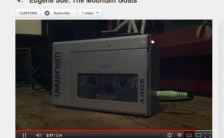
Part of the magic of field recordings is how something can be originally performed with a specific intention and then re-contextualized as something completely different. Take this famous field recording of workers at the University of Ghana post office by James Koetting. Originally recorded in 1975, it is best described by Koetting: “These men are working, not putting on a musical show.” It may not be intended as a “musical show,” yet it is hard not to be impressed by this recording which has now even popped up on NPR’s Hearing Voices.

“Cancelled Stamps” is not really a performance and the “musicians” don’t acknowledge it as making music. It is simply a work song in a tradition too old to trace back to its origin. These four Ghanaian postal workers are doing the daily task cancelling certain documents, they’re doing their jobs, and making a song out of it surely makes that less dull. Traditionally, work songs are used throughout history and cultures to help keep everyone working in an efficient rhythm. Taken out of the context of its setting, “Cancelled Stamps” becomes a stunning piece of music. The easy, laid back melody, provided by a worker’s whistling, perfectly floats over the complex poly-rhythm of the thudding stamps while another worker’s scissors click against the established beat. People chat somewhere in the background.

In some ways this transformation into music from mundane origins brings the works of people such as Matmos to mind. On 2001’s A Chance to Cut Is a Chance to Cure, M.C. Schmidt and Drew Daniel took recordings (in this case less mundane, more grisly) of various surgeries and made pop music out of them. Whether it is the warped nose-breaking techno of Matmos’ “California Rhinoplasty” or the thumping beats of “Cancelled Stamps,” the act of recording frames raw sound into a sharper focus; it makes it something far greater than its parts.

1972: Syreeta - Syreeta

Syreeta Wright started out at Motown records as a receptionist in 1965. By 1966, (like Martha Reeves from the Vandellas) Wright was a secretary for legendary producer Mickey Stevenson. By the end of the 60s she was recording demos for the Supremes. She was even considered to replace Diana Ross when Ross left the Supremes, though Mary Wilson/Berry Gordy chose to go with Jean Tyrell instead.

Wright’s relationship with Stevie Wonder was much more pronounced, as she was one of his backup singers and co-writers during his late 60s run of jazzier soul-funk. She co-wrote The Spinners’ hit “It’s a Shame” with Wonder and co-wrote/sang backup on “Signed, Sealed, Delivered” as well. After being married for eighteen months, the two divorced, but Wonder still handled production duties for Syreeta, Wright’s shamefully out of print self-titled LP.

The song that keeps me coming back to Syreeta is her reworked cover of Wonder’s “I Love Every Little Thing About You.” It’s gorgeous, lush, playful, and overwhelmingly more fun than the original. Wonder has a few backup vocals but Syreeta’s voice steals the show. Her staccato vocal lines during the chorus make the signature funk clav a distant backdrop.

Besides Wonder, Wright’s take on the Beatles’ “She’s Leaving Home” features a talkbox and you can take it or leave it, more or less, depending on how you feel about a talkboxes in the 70s. Her rendition of Smokey Robinson’s “What Love Has Joined Together” is spectacular though, enlivening the original with a much smoother vocal take.

The rest of the songs were written by Wright alone or with Stevie Wonder. It’s an interesting mix because it seems like Wright’s solo songs (“Happiness,” “Black Maybe”) hint at more of a subdued Northern soul sound instead of the Philly soul numbers that Stevie and the rest of the Motown label would veer off into during the 70s. It makes sense that Syreeta gained a lot of acclaim in the UK. It’s a shame that the hits eluded her in the US though, because she did put out a bunch of really good albums throughout the 70s and 80s. You get the feeling that 72’s Syreeta was her chance to establish herself. She never reached Diana Ross status. But after listening to her solo debut LP, it’s impossible to ignore her talent.

197X: Gloria Ann Taylor - “Love Is A Hurting Thing”

Just like vintage psych-rock, disco has its share of marginalized outsiders, regional indies, vanity press hopefuls, and talented nobodies. However, unlike psych, which has been exhaustively picked-over, reassessed, curated and reissued by generations of collectors, disco remains a relatively unspoiled frontier. Other than Arthur Russell, it’s hard to think of an obscure disco artist who has gotten posthumous due recently. And Russell had so many credentials beyond his disco sides that it almost feels as if he shouldn’t count.

So allow me to nominate producer Walter Whisenhunt and his wife, vocalist Gloria Taylor, for critical reassessment. Whisenhunt was a producer who worked with James Brown in the 1960s, and Taylor was an expressive soul singer whose voice was likened to Dolly Parton early in her career. They released a handful of tracks in the 60s and 70s, mostly Northern Soul 45s on imprints such as Silver Fox and SSS International (both owned and operated by mad genius Shelby S. Singleton), with just a few making it onto the majors. One such record was a gorgeous, haunting, deep-soul side entitled “World That’s Not Real,” released in 1973 on Columbia and failing to ignite any further major label interest. The track is serious goosebumps material:

Sensing that the majors were not going to foster their talent, Whisenhunt started his own label, calling it Selector Sound, and started getting serious about making disco music. This resulted in one of the most amazing slabs of vinyl you will never be able to afford, a limited promo pressing of a 12” entitled Deep Inside You, featuring a generic cover (with no year), credited to “Gloria Ann Taylor and Walter Whisenhunt’s Orchestra.” The disc features three stellar cuts, transposing the reverb-soaked, melismatic otherness of “World That’s Not Real” into the realm of hedonistic club music. The centerpiece is the seven-minute tour de force “Love Is A Hurting Thing.” I could talk for hours about the off-kilter, ravishing beauty of this track, but it’s best to just listen to it in its entirety and commence your own obsession.

Whisenhunt released another fantastically odd disco single with the long-winded title “I Am Saluting You For Your Love (And Understanding Ways)”, a track which does not feature Gloria, on an imprint bearing his own name. Again, the year of this release is unknown, so it’s hard to speculate whether this is evidence that the relationship ended. So much is unknown. I’ll leave it to a future archivist with greater resources at his disposal to locate the heirs to the Whisenhunt estate, sort out the mysteries, and release a 180 gram audiophile double-gatefold vinyl reissue of all the tracks plus more from the archives. Usually I would be worried that having answers to questions would somehow dispel the power of this kind of music, but “Love Is A Hurting Thing” is powerful beyond any enigmas which may surround it.

News

  • Recent
  • Popular

There's a lot of good music out there, and it's not all being released this year. With DeLorean, we aim to rediscover overlooked artists and genres, to listen to music historically and contextually, to underscore the fluidity of music. While we will cover reissues here, our focus will be on music that's not being pushed by a PR firm.