


1988: Dinosaur Jr. - Bug
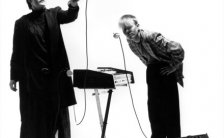
Sonic Youth, Black Flag, Minutemen, Meat Puppets, Hüsker Dü. It’s safe to say that SST Records had the strongest lineup of the late 80s. These bands pushed the volume and intensity of guitar-rock to earsplitting heights, but none of them could quite pull of the face-melting, fuzz-drenched guitar freak-outs of SST label mates Dinosaur Jr.’s own J Mascis. After rising to the pinnacle of slacker apathy early in life, Mascis rounded up his high school buddies Lou Barlow and Murph to form Dinosaur Jr. in Amherst, Massachusetts. The original Dino Jr. lineup released three noisy and abrasive albums before clashing personalities split the trio. Bug, their last release before Barlow’s departure, stands toe-to-toe with 1987’s You’re Living All Over Me as early Dino Jr.’s high point, combing their most ferocious playing with surprisingly catchy melodies.
While You’re Living All Over Me opened with brutally painful guitar and screamed vocals, Bug’s opener, “Freak Scene,” starts with an instantly accessible riff and never veers into noisy territory. It’s obvious that Mascis chose to expand his repertoire between albums, and with this new direction he stumbled on a formula that made Dino Jr.’s music highly listenable without compromising their noise-punk roots.
More than 20 years later, Bug still has one of the strongest back halves of any indie rock record. With “Pond Song,” Mascis finally makes good on what he hinted at earlier in the record with a perfect combination of jangly guitar and tight melodies. It sounds like Doug Martsch was listening, because “Pond Song” has many elements that latter became Built To Spill staples. “Budge” speeds things up, sounding closer to straight punk than Dino Jr. usually comes, and has some great harmony singing from Lou and J. The album closer, “Don’t,” is a totally different monster than any other song on Bug or in the band’s lager catalog. The song is pure madness, with Mascis coaxing waves of feedback from his guitar and Barlow bellowing with such rage that he coughed blood after the recording session. If that’s not hardcore, I’m not sure what is.
After Bug, Barlow left to explore the world of lo-fi with the near equally awesome Sebadoh, and Murph and J stuck out a few more albums before J made Dino Jr. a solo project. With each subsequent release, the quality dropped off until 1997 when even J decided to call Dinosaur Jr. quits. With their reunion in 2005, the subsequent release of two solid new albums, and the recent reissue of their first three albums, Dinosaur Jr. is deservedly relevant again.
1995: Neil Young - Dead Man
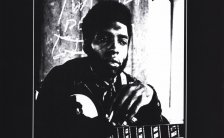
Let’s state the obvious; very few film soundtracks come close to the originality present in Neil Young’s score for Jim Jarmusch’s 1995 film Dead Man. Furthermore, there tends to be a stigma attached when a popular artist attempts scoring music for a film (The Batman album by Prince, anyone?) so it is even more of an accomplishment that Young’s work is so phenomenal here. This came after a great period where Young had been touring with Sonic Youth in 1991 and it feels like that younger group may have rubbed off on him.
These stark improvised guitar pieces, recorded by Young while he watched the film alone, were and still are tremendously unique. The pieces evoke Morricone and their influence can be heard today especially in the recent work of Earth (who had their music featured in a later Jarmusch film). The quality of the music aside, this worked so effectively with the film. The starkness of the music matches the grainy black and white film perfectly, and the improvised nature plays off Jarmusch’s own patient, subtle style. Often with his films you’re never quite sure where things will go, as if he were improvising on the spot, and Young plays right into that. This electric guitar score for a modern cowboy movie should be remembered as far more than just a soundtrack; it is one of Neil Young’s most fascinating albums.
1999: Loren MazzaCane Connors - Airs
The death of Percy Shelley occurred in July of 1822, less than a month prior to his 30th birthday. While sailing towards Lerici, Italy, Shelley and two other Englishmen drowned when Don Juan, Shelley’s schooner, sank during an intense storm. Shelley’s death was a subject of controversy, with likelihood theories as far ranging as suicide, navigational incompetence, and even a botched pirate robbery having been recorded — but the point here is that Shelley’s death was a tragic (if arguably fitting) end to a life filled with affliction.
Airs consists of 19 untitled pieces of free improvisation for solo guitar, plus a closing track entitled “The Death of Shelly” [sic] (as in Percy Shelley), a fitting closer to the air of gentle melancholy expressed by Loren Connor’s sparse (yet highly evocative) guitar playing. In short: the Romantics expressed deep feelings with their words; Connors does the same with only his guitar.
Despite the reference to Shelley, Airs does not remind me of his verse, which I generally find to be cloyingly dramatic, even by Romantic-era standards (e.g., “I fall upon the thorns of life! I bleed!” from Shelley’s “Ode to the West Wind”). Rather, Airs is coated with foreboding malaise, not unlike the more intense variety described in a letter written by Mary Shelley a month after her husband’s death, wherein she explained his claims to have met his own doppelganger — i.e., an omen of death. Upon witnessing his own doppelganger, Shelley remarked to his wife of having nightmares of their house collapsing in a flood — an eerily coincidental prediction of his death in the Bay of Spezia. This resulting sense of overhead despair reigns over Airs and, much like the Romantics, Connors often finds much to express within these feelings, evoking a gently restrained aura of somber reflection.
However, Airs doesn’t aim for the lachrymose evocations suggested by much Romantic poetry. Instead, Connors’ understated guitar sketches evoke the atmosphere surrounding such feelings — most notably to my ears, the ineffable sense of cyclic moroseness — that is, the inescapable feeling of lonesome repetition, where no matter one’s thoughts or actions, everything can only be perceived in shades of gray. Perhaps most impressively, despite its lack of thematic variance, the overall effect of Airs isn’t despondent so much as gorgeously poignant. It is a desolate and haunting recording to be sure, but not without moments of lucid beauty. There’s no solo-guitar technical wizardry or shredding histrionics to be discerned here — only the sound of a most poetic solo guitar, more lyrical than words could hope to capture.
1983: Lubomyr Melnyk - The Voice of Trees
Ukrainian-Canadian composer and pianist Lubomyr Melnyk emerged onto the contemporary music scene in the 1970s, but it’s only recently that his work has found an audience among those familiar with the “minimal” music of Philip Glass, Terry Riley, and Steve Reich. Melnyk’s keyboard studies are drawn from continuous, overlapping linear eddies (cf. the drawing in space of Pollock or Brice Marden) and pedal-sustained overtones, which he has termed “continuous music.” Looking to the Balinese gamelan and African rhythm choirs as well as a kinship with European composers Charlemagne Palestine and Simeon Ten Holt, Melnyk’s continuous music resurfaced at seemingly the right time with the reissue of 1979’s KMH (Music Gallery Editions/Unseen Worlds).
Though he’s long documented his work on CD-R and cassette, most of that hasn’t been particularly easy to source. Take for example The Voice of Trees, a stunning work of orchestral magnitude for two pianos and the three tubas of British improvising composer Melvyn Poore. Designed as one part of a sound and movement fantasia for the choreographer Kilina Cremona, The Voice of Trees was privately released on cassette (and later a CD-R), though this Hinterzimmer CD is its first commercial issue anywhere (and therefore, pretty much the first anyone outside of the cognoscenti were aware of its existence).
Recorded in Lyon, France in 1983, The Voice of Trees is a masterful appropriation of overdubs to create a lushly orchestrated environment that explores nuance, texture, and scale through overtones and the ebb and flow of pre-recorded presence. Poore’s tuba possesses a dusky hue and adds a girding contrast. A founding member of Zeitkratzer, his work with the London Jazz Composers Orchestra and trombonist Paul Rutherford’s (1940-2007) brass ensembles is first-rate and also worth seeking out. However, these brass waves keen upward and, set against the skating piano rhythms, build pedal points that are both stately and light. Melnyk’s interlocking and disassembled chords are in consistent, delicate play with phase relationships, creating a rich and active setting for the brain’s tonal receptors. The ear picks up ghostly choruses, guitar plinks, mallet percussion, organ and string-like harmonic masses.
Melnyk himself disavows the use of the term “minimal” in relation to his art – as most practitioners of tonal process music do – and prefers it to be called “maximal” for the amount of physical work and formal density that is put forth. But Melnyk’s music, like that of his peers (and which differentiates this language from Cage and the Darmstadt school immensely), is also predicated on the composer as nuanced performer. It wouldn’t be what it is without not only Melnyk’s abilities, but also his touch and phrasing. In the moment, he is delicate and massive, flashing between athletic formal purity and hushed reflection – a far cry from the machine music of David Tudor or the Kontarsky brothers, for example.
Though the music’s structure and results are quite different, it might not be totally unfair to align Melnyk with the later, more reductive music of Cecil Taylor, albeit without the bluesy flourishes. Perhaps the presence of immediacy is one reason why this music has an affinity with pure improvisation, though it is not improvised in the “jazz/creative music” sense of the word. One knows it’s the hand of Melnyk or Riley as much as one knows it’s Monk or Taylor at the piano, even if the results are many worlds apart. The Voice of Trees is a gorgeous document, fully realized continuous music that opens up to a range of aesthetic possibilities and certainly one of Melnyk’s most powerful recordings.
1967: Vashti Bunyan - “I’d Like to Walk Around in Your Mind”
Vashti Bunyan was one of many figures revived by the freak-folk movement. She eluded fame in the late 60s. She was friends with Donovan; members of Fairport Convention and Incredible String Band supported her and played on her record. Robert Kirby, the string arranger for Nick Drake, helped on her first record as well. Still, she had little success and decided to walk away from a career in music.
Fortunately, her first record Just Another Diamond Day gained a cult following – not only influencing a new generation of experimental folk songwriters but also bringing Bunyan back to music after thirty years of raising her children and tending animals in peace.
The one song that has always stuck out for me in Bunyan’s catalog is 1967’s “I’d Like To Walk Around in Your Mind.” Produced by Mike Hurst (who also worked with Cat Stevens and the Spencer Davis Group) and intended to be a single for Immediate Records, it’s a sparse arrangement – double bass, cello, acoustic guitar, voice, and light percussion. Her voice is as beautiful as ever; floating calmly over the gently fingerpicked guitar.
The song appeals to me for many reasons, but primarily it seems to offer a raw line of communication into the mindset of a British female songwriter during the late 60s. Despite sounding sweet and folky, the lyrics are still passively vicious. “I’d like to walk all over the things you say to me/ I’d like to run and jump on your solitude… I would disturb your easy tranquility…”
I’ve always thought it was a clever song to a lover with 60s political-peace implications, but the song takes on more meaning in relation to Bunyan’s personal narrative. Is she addressing her critics and her listeners? Her own career aspirations? In a line like “You see the end before the beginning has ever begun,” it’s difficult not to hear her eerily foreseeing a short-lived musical career.
For the song’s conclusion, there’s a key change while Bunyan makes her quietly emphatic last mark on the listener. “But most of all I’d like you to be unaware/ and I’d just wander away/ trailing palm leaves behind me/ so you don’t even know that I’ve been there.” While it works as an ode to a lover, I find this last verse to be one of the most concise, cutting, and vulnerable lyrical commentaries on the ephemeral transience of a pop song. There’s some fatalistic irony having the commentary within the song itself, as if she knows that her “sweet” voice will belie her message. If love is fleeting, so are songs.
1980s: A.C. Marias and Wire
I’m beginning to understand why Wire enthusiasts still follow the band’s every collaboration and EP 20 years on. My misconception was that Wire was a standalone band, and that their experiments were limited to Wire. To me, they seemed experimental in those sometimes reactionary and desensitizing late 70s/80s ways that are well understood now as punk and post-punk, new wave etc., so I wondered what else there was to it.
Lately I’ve been listening with more appreciation, and rewardingly I’ve discovered that Wire was – true to their name – not a single tribe, but a roadie’s nest of raw 80s underground connections. Angela Conway was one of the collaborators who contributed to Wire and later Dome (one of the numerous spin-outs from Wire’s mid 80s break-up). For her sole album, Conway called herself A.C. Marias. She produced videos for Wire and later made video production her career. She was a dancer, and she wrote ethereal music that reflected this, being surprisingly free of hang-ups in the abrasive post-punk scene that was founded on Wire’s edgy example.
But as often happens with musical collaborations, the deeper you go, the more difficult it is to draw a line under authorship. Wire’s Bruce Gilbert is an equal contributor on A.C. Marias only album, One of our Girls have Gone Missing. And Conway contributed vocals and compositions to Wire members’ bands He Said, Dome, and P’o. The first A.C. Marias track I discovered was not on the album; it was one of Conway’s contributions to Dome, called “So.” “One of our girls has gone Missing” seemed less striking: plucky feminist flag-waving disguised as bone-china pop. Compared to Wire it seemed like a leisurely stroll on the beach. But what I liked about it was how its strangeness grew on me. Wire’s experiments were out front, meddling with my ears. With them, I had to grow to accept the sometimes dated combat tactics. A.C. Marias was so unobtrusive I had to listen enough times to find the uneasy jazz club bass of “Trilby’s couch.” I didn’t notice the clarinet in the first few bars, and I thought the breezy new wave sound of “One of Our Girls Have Gone Missing” was merely pleasant – not the unsettling tale of a female soldier going AWOL that it is. It’s a great track – after a few listens it becomes an escape into vertigo, rather than freedom – an “Oh well” that you take seriously. “So” was also unsettling: it was an A.C. Marias track on the Dome album, with an eerie chamber-choral atmosphere, that sounded like moments on Julia Holter’s Tragedy.
It’s easy to see how people would think of these Wire offshoots as “Wire-lite,” but having listened to the originators and the collaborators both, it’s nice to find that I’ve stumbled into a tangled collective of weird experiments rather than an essential band that I must learn to like. A.C.M, Dome, Cupol, He Said, et al., are integral to understanding the whole mess of post-punk connections related to Wire. A.C. Marias is a remote, pale satellite that gives you an insight into what was concerning a wide network of artists in the late 70s and early 80s – and she is well worth checking out in her own right.
1968: The Bob Seger System - Ramblin’ Gamblin’ Man
Growing up in Michigan, I developed a very real hatred for Mr. Seger’s music at a young age. Very few things can instill a rage in me with such quickness as the opening bars to “Turn the Page” or “Katmandu.” Was it the fact that these songs were played too much on our local classic rock stations? Nahh, it’s just that Seger’s music is grey, dreary, boring, country-fried blues rock. There isn’t a single redeeming quality I can pick out of Bob Seger and The Silver Bullet band’s oeuvre.
It’s not surprising to me that Seger has basically disowned his early music. Ramblin’ Gamblin’ Man is a diamond in the rough. A psychedelic heavy rock and soul album his first fronted group released in 1968 to moderate success. Ramblin’ Gamblin’ Man surprised the hell out of me when I first heard it. It is raw, in the best way possible. The three, sometimes four piece group covers a lot of ground in the album’s short run time. From the Motown pop of the title track to the psychedelic stomp of “White Walls” there aren’t many dull moments on Ramblin’ Gamblin’ Man. Seger’s soulful (for a white boy out of Ann Arbor) vocals are the hardest sell but the weighty instrumentation gives the album that great Michigan gutter-rock feel.
The rest is history, sort of. Seger had skipped out on a potentially enriching Motown deal to sign to Columbia for the Bob Seger System’s three albums. After struggling for artistic control following the moderate success of Ramblin’ Gamblin’ Man in the years following, Seger disbanded the System to pursue a path in the boring radio trash most people are familiar with. Still, Ramblin’ Gamblin’ Man deserves recognition for being a powerful psychedelic rock record that very much represents its time and place.
Bob, I would have never believed you had it in you.
1966: Small Faces - “All or Nothing”
Unlike the other big mod band from the 60s, The Who, the Small Faces didn’t earn their place in fans’ designer clothed hearts by being bombastic. Instead, the foursome wrote cool, memorable songs that had the British sensibility of the Kinks with the melodies and delivery of Motown artists.
“All or Nothing” is quite a simple song; guitar chords arpeggiated for one section and strummed on the next one, applying the immortal “soft verse/loud chorus” dynamic to a simple lyric about losing someone, topped with a melody that gets stuck in your head without much effort. The song is a little strained by the Small Faces’ standards up to that point (and they would get much looser on their follow up album, the superb Ogden’s Nut Gone Flake) without resorting to balladeering; in other words, it does rock, although you can imagine it being a hit for a Merseybeat band a few years before if it had less balls.
What makes this song is the bridge before the final chorus. It’s here that the build up pays off and Steve Marriott actually lets it rip with a soulful voice that’s raspy and beaming with desperation, like blue-eyed soul if it was actually about getting your blood boiling instead of just trying to sound cool (in fact, Marriott was one of the first to successfully sing in this style). The now-famous dynamic can be heard here, predating the use of the same formula picked up by the Pixies and Nirvana by some 20 years.
1999: Toumani Diabaté with Ballaké Sissoko - New Ancient Strings
I wish I could say I was some sort of expert on world music, but the sad truth is I’m not. Every time I roll into a record store feeling awesome about picking up an album by some obscure sitar player, I inevitably walk out with literally dozens of new artists added to my future-purchases list that I’ve never heard of. The long and short of it: this isn’t going to be an article on the ethnomusicology of West Africa. All I can do is recommend one of my favorite world music releases from the last couple decades based solely on the fact that it sounds good to my ears. Damn good.
New Ancient Strings is a collaboration between Toumani Diabaté and Ballaké Sissoko, two great kora players that play great together. The kora is a massive 21 string harp made from gourd, cowhide, and wood that is widely used in West Africa. It’s played with bare fingers and has a massive range, making it a captivating instrument for solo performance. Diabaté and Sissoko gathered in Bamako, Mali on September 22, 1997, almost forty years after Mali’s independence, and cut this entire album in one sitting. The virtuosity of this album is apparent from the opening notes of “Bi Lambam” and doesn’t let up for an entire hour as these two trade mind boggling phrases with what sounds like casual ease. But the real miracle of this album is that it never sacrifices its emotional tone for mindless kora wanking. Every note feels like it has a place, and both musicians provide excellent foundations for the others fingers to glide all over. This might not be the deepest cut of African music you’ve ever heard but I guarantee it can find an audience among almost any listener, something not many world music albums can boast.
1958: The Missa Luba
From the start you’re grabbed by the passion, the rhythms, and most of all by the sense of love put into the music. The Missa Luba, originally performed by Les Troubadours Du Roi Baudouin in 1958, has been making converts of people who would not normally be interested in church music, or world music for that matter. To brand this music with such labels would be a major misstep though, because the Missa Luba transcends such tropes.
The recording is a Congolese adaptation of the Latin Mass arranged by a Franciscan Friar Guido Hazaan, and recorded by a male children’s choir. It was recorded four years before the start of Vatican II when Latin was essentially phased out of the Mass. In the original liner notes Pulitzer Prize winner Studs Terkel described the sound as being an example of a missionary learning from a new culture instead of forcing something upon people. When you hear the recording you probably won’t understand anything being said, but that never gets in the way of the sense of love and joy coming through. That sort of thing can be off putting at first, but the sincerity here manages to blow away any sort of cynicism. This has certainly allowed the Missa Luba to grow in respect over the decades and stretch its influence outward instead of being forgotten as a world music gimmick.
That overwhelming sense of bliss in the music brings me to a rather unexpected musical connection. If you listen to the Missa Luba with ears up to date with modern music, you might be shocked by how similar if feels to albums like Person Pitch and Merriweather Post Pavilion. Throughout their entire discography Animal Collective have nailed that same combination of spiritual power and tribal freedom; arguably one of the key reasons they have such a dedicated fan base. These share the Charles Ives philosophy of all music having equal value, from Church music to folk songs.
When Noah Lennox toured last year he would usually let Tomboy closer “Benfica” bleed into Person Pitch opener “Comfy in Nautica,” some of the most powerful moments on the respective albums. That moment felt strong enough to be playing in a church, it could have fit in during a Mass, and that is exactly what Father Hazaan accomplished with his choir: music that expressed a universal spirituality regardless of cultural boundaries.