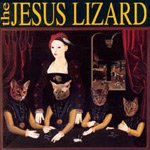
2009: The Jesus Lizard - Pure; Head; Goat; Liar; Down
In the often rarified world of noise rock, there are few acts as powerful or galvanizing as The Jesus Lizard. Combining the gut-wrenching ferocity of The Birthday Party with Led Zeppelin heaviness, and topping it all off with a twisted, occasionally juvenile sense of humor, The Jesus Lizard created some of the most terrifying sounds ever committed to tape without sacrificing a single iota of fist-pumping, stage-diving, in-your-face immediacy. Now, ten years after their dissolution, Touch and Go has given the band’s back catalogue a much-needed facelift.
As with many independent albums recorded in decades past, the original pressings sounded quiet by today’s standards. The remastering brings each wet slice of nastiness to its full, ear-shredding volume. Even more important than making the albums louder, the reissues shine a spotlight on Steve Albini’s production. Along with Surfer Rosa, Albini’s work with The Jesus Lizard has long been considered some of his finest engineering, and it’s never been easier to hear why. From the chittering locust-swarm of crashing cymbals that rises at the end of “Slave Ship,” to Yow’s gargling-piss-through-a-mouthful-of-wet-leaves tirade in “Starlet,” every detail is lovingly laid bare for the listener to admire. Each release comes with an assortment of singles, B-sides, and live cuts, some of which (like “Pop Song,” “Panic in Cicero,” and the “Boilermaker” demo) have not been previously collected.
Listening to these albums all at once, I got a powerful sense of how rapidly The Jesus Lizard developed in the five short years they were signed to Touch and Go. Just two years after the split of their Austin noise-punk band Scratch Acid, David Yow and bass player David Wm. Sims teamed up with guitarist Duane Dennison to release the Pure EP. It contains some of the most unhinged vocal work of Yow’s career. Whether he’s croaking obscene, inflectionless threats in the Ministry-esque “Blockbuster,” unleashing a torrent of harrowing shrieks in “Bloody Mary,” or squealing and snorting his way through “Rabid Pigs,” Yow makes clear that there isn’t another singer in the industry quite like him.
The band's decision to use a drum machine, as well as their association with Albini, is probably responsible for the Big Black comparisons that dogged them early on. But the addition of drummer Mac McNeily on their first full-length, Head, brought a living, organic touch to the music, and lent an even greater propulsive force to songs like “One Evening” and the album’s awe-inspiring centerpiece, “7 vs. 8.” One can hear echoes of Scratch Acid’s “Mary Had a Little Drug Problem” in Dennison’s grinding guitar tidal wave, but the pacing and dynamic control in "7 vs. 8" speaks of a maturity never quite attained by Yow and Sims’ earlier act.
It’s Goat, however, where The Jesus Lizard reaches the perfect balance between theatrical, nightmare-inducing noise and hard-hitting rock. Lurching, sub-rational eruptions like “Seasick” sit comfortably next to tighter, riff-oriented assaults like “Mouth Breather.” Moreover, the two approaches combine in ways only hinted at in previous releases. “Monkey Trick” is a shining jewel in The Jesus Lizard catalogue. The rhythm section takes center stage through much of its four-minute running time. Dennison wraps his shimmering, intermittent guitar figures around the edges of Sims’ portentous bass line and McNeily’s measured poundings. The tension builds towards a moment of sweet release as Dennison seizes the lead back from Sims with a shredding burst of noise followed by a series of staccato notes timed in unison with Yow’s wild shrieks.
Liar only continues Goat’s triumphant rampage. The band kicks the door in with songs like “Boilermaker” and “The Art of Self-Defense,” making room for the spry Texas punk of “Rope” and the brooding, epic “Zachariah,” both of which stand alone amid the band’s early work. Perhaps the highest point of the album is the single “Gladiator.” Yow snarls, keens, and hisses through every shift and contortion that Sims and Dennison can muster, and the lyrical juxtaposition of marital infidelity and gunplay only enhances the song’s oblique sense of foreboding -- an unshakeable feeling that something bad is going to happen.
From Pure to Liar, The Jesus Lizard had been on a steady upward climb; Down finds the band reaching a plateau. While Yow’s vocal performances remain captivating, he doesn’t push himself quite as far. His lyrics come across cranky more often than scary, and the humor -- typically ambiguous on previous releases -- is more overt (although even when Yow is being funny he says things like “I’m gonna cut little gill slits in the side of your neck and blow in 'em with a straw”). Down generally lacks the psychotic energy that characterized the band's prior work. Yet when viewed apart from its fore-bearers, the album still has plenty to offer. Fine moments like “Fly on the Wall,” “The Associate,” and “Destroy Before Reading” show that, though this beast may have mellowed, it hadn’t lost its teeth.
The Jesus Lizard had plenty of contemporaries in the early 90s who sought to reconcile their esoteric punk leanings with heavy metal’s big, dumb gut-punch, but few (if any) made music so simultaneously thrilling and threatening. If you’re discovering the band for the first time, then these reissues are a no-brainer (I’d recommend beginning with Liar or Goat). The improved sound quality and bonus tracks should make each disc attractive to longtime fans, though they’ll probably want to start upgrading gradually. In any case, one can only hope that the buzz surrounding these reissues and the band’s current reunion tour will introduce the scariest gods in Chicago’s rock pantheon to a whole new generation of young minds just waiting to be warped.
Pure:
1. Blockbuster
2. Bloody Mary
3. Rabid Pigs
4. Starlet
5. Happy Bunny Goes Fluff-Fluff Along
6. Bloody Mary (Live)
Head:
1. One Evening
2. S.D.B.J.
3. My Own Urine
4. If You Had Lips
5. 7 vs. 8
6. Pastoral
7. Waxeater
8. Good Thing
9. Tight ‘N Shiny
10. Killer McHann
11. Chrome
12. Killer McHann (Live)
Goat:
1. Then Comes Duddley
2. Mouth Breather
3. Nub
4. Seasick
5. Monkey Trick
6. Karpis
7. South Mouth
8. Lady Shoes
9. Rodeo in Joliet
10. Sunday You Need Love
11. Pop Song
12. Sesick (Live)
13. Lady Shoes (Live)
14. Monkey Trick (Live)
Liar:
1. Boilermaker
2. Gladiator
3. The Art of Self-Defense
4. Slave Ship
5. Puss
6. Whirl
7. Rope
8. Perk
9. Zachariah
10. Dancing Naked Ladies
11. Wheelchair Epidemic
12. Dancing Naked Ladies
13. Gladiator (Idful Studios Sessions Demo)
14. Boilermaker (Idful Studios Sessions Demo)
Down:
1. Fly on the Wall
2. Mistletoe
3. Countless Backs of Sad Losers
4. Queen for a Day
5. The Associate
6. Destroy Before Reading
7. Low Rider
8. 50 Cent
9. American BB
10. Horse
11. Din
12. Elegy
13. The Best Parts
14. White Hole
15. Glamorous
16. Deaf as a Bat
17. Panic in Cicero

Big Star - Keep an Eye on the Sky
It’s best to strip away the legends, the nearly four decades of rock-writer mythologizing, the unabashed evangelism of the fervent cult of Big Star. Discard it all. Just press play on “Back of a Car” and wonder with the rest of them how the song escaped being a massive hit, one of those tunes that ends up on thousands of mass market “Best of the Seventies” compilations, its creators immortalized on yellowing covers of Rolling Stone. It’s just that good, a pitch-perfect encapsulation of everything primal about youth and reckless, burgeoning independence: you sat in the back of a car, “the music so loud you can’t hear a thing.” Maybe it was The Beatles thundering out of your buddy’s mom-lent sedan. Maybe it was The Replacements, turned up so loud the speakers crackled and shuddered. Maybe it was goddam Blink 182. Whichever the case, the song fills you with memories of that moment, as Jody Stephens cranks out that sublime drum fill. It’s as universal as how wet your first french kiss felt, never to feel that sloppy wet again.
Pardon the hyperbole. It’s near impossible to resist when discussing Big Star. Keep An Eye On the Sky, the new boxed set from Rhino/Ardent Records rewards this enthusiasm. Over 98 tracks, Big Star’s three studio albums -- the cheekily titled #1 Record, it’s sharper-edged follow-up Radio City, and the group’s fractured and brilliantly disjointed Third/Sister Lovers -- are represented with album tracks, alternate takes, and demos. Pre- and post-Big Star recordings of principal songwriters Chris Bell and Alex Chilton are included, as well as assorted covers and a live set that finds Chilton, bassist Andy Hummel and drummer Jody Stephens -- following Bell's departure -- opening for Archie Bell & The Drells at Lafayette’s Music Room.
The roots of Big Star lie in the early careers of Chris Bell and Alex Chilton. Bell, a Memphis Anglophile began refining the band’s sound with Stephens, Hummel, and other Tennessee teens under various names like Icewater and Rock City, hanging and recording at Ardent Studious under the tutelage of John Frye, a man who would greatly shape Big Star’s trajectory. While Bell was learning the ins and outs of crafting albums, Chilton was already knee-deep in the music business. At 16 he was fronting The Box Tops, a pre-packaged soul combo that yielded the giant hit that Big Star never delivered, “The Letter.” Frustrated with a lack of input, Chilton left the group and spent some time busking around New York, toying with the idea of becoming a 12-string wielding folk singer.
Bell’s early experiments are represented on the new box set by “Psychedelic Stuff,” which finds the young musician toying with quaint psychedelia. Rock City’s “All I See Is You” and “The Preacher” showcases the band approaching the crystalline sheen of #1 Record. None of Chilton’s Box Tops songs are included, but given his animosity toward the experience (“Pretty scummy,” he remarked during a radio interview promoting Big Star’s second album), it seems fitting. “Every Day As We Grow Closer,” recorded during his time in New York, appears instead -- a bit cotton candy, but his gift for melody is unquestionable. In light of these songs, the alchemy of #1 Record becomes apparent. Big Star was already in existence when Bell asked Chilton to join, and #1 Record is clearly Bell’s record. Chilton’s contributions, however, can’t be understated. While the anthemic, Christian undertones of “The Ballad Of El Goodo” and “Try Again” exhibit Bell’s rounded, melodic sturdiness, Chilton’s lead on songs like “In the Street” demonstrate a wilder, looser Big Star, while his ballad, “Thirteen,” and his demo of Loudon Wainwright’s “Motel Blues” offer a complex mix of sentimentality and sexuality.
#1 Record should have been the band’s breakthrough. But shoddy distribution by Stax and lack of promotion ensured that, despite the ravings of rock writers (always the band's most affirming and useless allies), the record was stillborn. Dismayed by the commercial failure of the album, Bell left the band.
Keep An Eye on Sky includes a live set by the Chilton-led power trio, finding the group opening paradoxically for the aforementioned Archie Bell & The Drells. The crowd couldn’t care less, but the set is hot. Bell’s presence looms over the band, with Chilton and company performing two of his unreleased songs, the stellar “I Got Kinda Lost” and “There Was a Light,” as well as covers of songs by T.Rex, Todd Rundgren, and The Flying Burrito Brothers. The quality is impressive, with room mics yielding a fuller and more complex sound than previous soundboard recordings. That the audience seems uninterested in the band actually improves the recording, in typical Big Star fashion.
The set also features performances of songs from Radio City, which found Alex Chilton fronting the band as head songwriter. The record was even more brilliant that its precursor. In Chilton’s hands, Big Star became a sharper unit. Bell’s concepts are hardly discarded -- he even sat in on some early songwriting sessions -- though the extent of his contribution isn’t entirely clear. Tracks like “September Gurls,” “O My Soul,” and “Life is White” combine the melodious aspects of the band with more disjointed ideas; the wailing harmonica of “Life is White” borders on intrusive but achieves a greater good, and “She’s a Mover” rattles with nervous, soulful energy. The record was greeted with even more glowing reviews, but met the same fate as the band’s debut, disappearing off record store racks and fading into obscurity.
Third/Sister Lovers, represented on Keep An Eye On The Sky by album tracks and surprisingly interesting demos, found the band at the end of their creative rope. While Chilton would go farther off the deep end during his solo career (see the careening Like Flies on Sherbert), the record finds him swinging alternately between studious pop like “Jesus Christ,” a bafflingly sincere Christmas song, and the harrowing folk of “Holocaust.” Third/Sister Lovers perhaps makes the best case for Big Star’s continued influence over “alternative rock” and all its mutant strains. The record doesn’t achieve the solid statements of the band’s first albums, but instead lays out the template for a “difficult album,” one in which a band’s strengths are met by a willingness to challenge themselves. The record is hardly cohesive, and Keep An Eye On The Sky’s inclusion of Chilton’s takes on “Nature Boy” and “Whole Lotta Shakin’ Goin’ On” reveal an even more fractured mind state than the record proved -- an aggressively divergent take on classic pop. The music world didn’t seem to care about Big Star, and Chilton played like a man with nothing to loose.
Two of Bell’s post-Big Star songs are presented as well, the A- and B-side of his lone solo release, a single on Chris Stamey’s Car Records. Both tracks showcase a markedly different approach than Chilton’s ramshackle one. “You And Your Sister,” featuring back up vocals from Chilton, perfects the sweet folk pop of #1 Record, even one-upping “Thirteen” from that album. “I Am the Cosmos” follows, displaying Bell’s attention to craft; the song is perfect, with intricate guitar parts layering one epic theme -- a breakup jam delivered as existential crisis. The track demonstrates what Bell was capable of with full control. Sadly, a car accident robbed fans of any follow up until Rykodisc issued the posthumously released I Am the Cosmos, which combined the single with Bell’s other demo work. Rhino Handmade is reissuing the collection in a deluxe, two-disc format to accompany Keep An Eye On The Sky.
Peter Buck of R.E.M. states in the collection’s resplendent liner notes: “They were like this weird myth of America: These guys who did brilliant work, were ignored and disappeared. It probably would have been better for the myth if no one had ever seen those guys again.” Of course, we did see them again. Chilton and a reconfigured group, including John Auer and Kevin Stringfellow of The Posies, have done limited touring, and even issued a new record in 2005, In Space. It wasn’t all that great, despite containing a few killer cuts. Keep An Eye on the Sky ignores this record, and it’s for the best. The songs here represent more than just a band; they represent the myth, the sound of “beautiful losers,” as Buck describes them, making good on the promise their sound always presented.
Disc 1:
1. Chris Bell: "Psychedelic Stuff"
2. Icewater: "All I See Is You"
3. Alex Chilton: "Every Day as We Grow Closer" (Original Mix)
3. Rock City: "Try Again" (Early Version)
4. Rock City: "The Preacher"
5. Feel
6. The Ballad of El Goodo (Alternate Mix) *
7. In the Street
8. Thirteen (Alternate Mix) *
9. Don't Lie to Me
10. The India Song
11. When My Baby's Beside Me (Alternate Mix) *
12. My Life Is Right (Alternate Mix) *
13. Give Me Another Chance (Alternate Mix) *
14. Try Again
15. Chris Bell: "Gone With the Light" *
16. Watch the Sunrise
17. ST 100/6 (Alternate Mix) *
18. In the Street (Second Recorded Version)
19. Feel (Early Mix) *
20. The Ballad of El Goodo (Alternate Lyrics)
21. The India Song (Alternate Version) *
22. Country Morn
23. I Got Kinda Lost (Demo)
24. Motel Blues (Demo) *
Disc 2:
1. There Was a Light (Demo) *
2. Life Is White (Demo) *
3. What's Going Ahn (Demo) *
4. O My Soul
5. Life Is White
6. Way Out West (Alternate Mix) *
7. What's Going Ahn
8. You Get What You Deserve (Alternate Mix) *
9. Mod Lang (Alternate Mix)
10. Back of a Car (Alternate Mix) *
11. Daisy Glaze
12. She's A Mover
13. September Gurls
14. Morpha Too (Alternate Mix) *
15. I'm in Love With a Girl
16. O My Soul (Alternate Version) *
17. Back of a Car (Demo)
18. Daisy Glaze (Alternate Take) *
19. She's a Mover (Alternate Version)
20. Chris Bell: "I Am the Cosmos"
21. Chris Bell: "You and Your Sister"
22. Alex Chilton: "Blue Moon" (Demo) *
23. Alex Chilton: "Femme Fatale" (Demo) *
24. Alex Chilton: Thank You Friends" (Demo) *
25. Alex Chilton: "You Get What You Deserve" (Demo) *
Disc 3:
1. Alex Chilton: "Lovely Day (aka Stroke It Noel)" (Demo)
2. Alex Chilton: "Downs" (Demo)
3. Alex Chilton: "Nightime" (Demo) *
4. Alex Chilton: "Jesus Christ" (Demo) *
5. Alex Chilton: "Holocaust" (Demo) *
6. Alex Chilton: "Take Care" (Demo) *
7. Alex Chilton: "Big Black Car" (Alternate Demo) *
8. Manana *
9. Jesus Christ
10. Femme Fatale
11. O, Dana
12. Kizza Me
14. You Can't Have Me
15. Nightime
16. Dream Lover
17. Blue Moon
18. Take Care
19. Stroke It Noel
20. For You
21. Downs
22. Whole Lotta Shakin' Goin' On
23. Big Black Car
24. Holocaust
25. Kanga Roo
26. Thank You Friends
27. Till The End of the Day
28. Lovely Day *
29. Nature Boy
Disc 4 (Live at Lafayette's Music Room, Memphis, TN):
1. When My Baby's Beside Me *
2. My Life Is Right *
3. She's a Mover *
4. Way Out West *
5. The Ballad of El Goodo *
6. In the Street *
7. Back of a Car *
8. Thirteen *
9. The India Song *
10. Try Again *
11. Watch the Sunrise *
12. Don't Lie to Me *
13. Hot Burrito #2 *
14. I Got Kinda Lost *
15. Baby Strange *
16. Slut *
17. There Was a Light *
18. ST 100/6 *
19. Come On Now *
20. O My Soul *
* previously unreleased
Squarepusher - Music Is Rotted One Note
I’ll say it up front: I’m not a big fan of Squarepusher these days. He churns out soulless drivel on record and comes across as an arrogant show-off at live shows. I used to like him though, a lot. I used to think the sun shined out his arse, and I awaited each new release with fervor, eagerly anticipating another freaky chunk of drill ‘n’ funky bass written by someone who could actually, you know, ‘write’ music. So when Music Is Rotted One Note dropped in ’98, I immediately snapped it up, ready to dance myself spastic as soon as I got back home to my stereo. But I didn’t dance that day; I just got kind of weirded out, and then, after a few listens, finally became impressed.
At the age of 23, Tom Jenkinson took it upon himself to go explore new territory. Not content with being different from the norm, he ventured to be different from his norm. Gone were the ultra-precise breakneck beats and acid overtones of Hard Normal Daddy et al., replaced by live and loose drums and alien cassette atmospherics. It was a departure that threw many fans sideways, myself included. There are no rave-ups on the album, and the only overtly computer-based sounds appear on the bridge of the spacecraft you teleport to in track four, “Curve 1.” It’s an odyssey, this whole thing.
Starting the album with a little idle chatter, you’re placed in a very real room with a very real mic; then, as if by some error of space and time, the music starts and you’re swept away in Squarepusher's approximation of fusion. It’s pleasant enough and not wholly unfamiliar for a ‘pusher fan, but over the next couple of tracks the sound seems to separate -- elements move apart and space opens up between them all. It becomes almost slack and very sci-fi.
From there, the album plays like a series of landings and takeoffs, scenes of investigations and the flights between them, exploring an outer nebula, alien voices; it is humorous, ridiculous even, then it's suddenly dark as the deepest depths of a black hole. And stuck in the middle of this is the sublime “My Sound,” the soundtrack of contentment, the raison d’etre of this whole wild trip.
Yes, the debt to Live Evil-era Miles Davis is evident, but the Squarepusher style is in the foreground, with his mastery of sampling and production shown in a whole new light, divorced from the tightly programmed beats of before. This is Squarepusher with room to breathe; Tom Jenkinson the man, not the machine. Sure, there’s tracks that fail to impress, but on an album so full of experiments it’s surprising how little is throwaway or disappointing.
Music Is Rotted One Note is the sound of a talented young musician pushing himself to try new things, and the discoveries he made fused with his previous ravings and informed everything he did from then on. But the jazz elements in his recent work have been cleaned up, sterilized, and made coffee-shop at times, while arid virtuosity abounds. It was on Music Is Rotted One Note that he really went exploring, and it yielded some of the finest results of his career -- some of the most impervious to the ravages of retrospect.
1. Chunk-S
2. Don't Go Plastic
3. Dust Switch
4. Curve 1
5. 137 (Rinse)
6. Parallelogram Bin
7. Circular Flexing
8. Ill Descent
9. My Sound
10. Drunken Style
11. Theme From Vertical Hold
12. Ruin
13. Shin Triad
14. Step 1
15. Last Ap Roach
Sunny Day Real Estate - LP2
Fourteen years removed, it's hard to imagine the cloud of mystery that surrounded Sunny Day Real Estate following their breakup. Their debut album Diary, a surreal and propulsive work, sounded fresh: raging enough to attract the ears of hardcore and punk fans, but subtle enough to earn an Alternative Press comparison to Steely Dan. Jeremy Enigk’s distinctive vocals moved from subtle beckoning to impassioned screams, and the music contained dynamics to match. But Diary had barely settled when breakup rumors began circulating, partly fueled by Enigk’s embrace of Christianity. Remember, this was a time before the internet became ground zero for music news; rumors spread by chain and appeared in zines. It seemed surreal, but it also made the appearance of a second Sunny Day Real Estate album seem practically miraculous.
In the fall of 1995, I was a freshman in college and had a dedicated internet connection for the first time. I came upon a website that had brief live clips of songs that would appear on LP2, fragments of interviews with Enigk, and news of the band members’ various guest appearances. It had me captivated; these clips sounded nothing like Diary, suggesting a band demolishing the demarcations of their style. So the day LP2 was first released, I purchased a copy, withdrew the CD case from plastic wrap, opened it up, and was promptly baffled: the packaging was so minimal as to be surreal -- song titles, music credits, and a photograph of a fly were all that was inside. Compared to the detailed artwork and lyrics of Diary, this was unexpected. And given the music that I was about to hear, the lack of printed lyrics felt even more significant.
On paper, LP2 may look similar to Diary: both traffic in abundant loud/quiet/loud dynamics, both push Enigk’s voice from calm to anguished, both end on notes of release. But LP2 is ultimately a much more challenging record. Songs end abruptly and structures shift unrelentingly, the familiar yanked away for tempo and stylistic changes that defy expectation. (“J’Nuh” in particular embodies the latter quality.) Most significantly, Enigk’s vocals are almost impenetrable: it isn’t until “5/4,” the album’s fourth song, when the majority of his lyrics can be discerned. And it’s probably no coincidence that, of the songs on LP2, this track most directly addresses his faith.
The album builds haltingly across its nine tracks, and by the time we reach the midway point, it has drained us, exhausted us. The band seems divided between building on the style of Diary and imploding it. When “8” hits, with Enigk crooning something about a “rain song” before the guitars kick in, it’s a necessary catharsis. Enigk’s voice roars, and the guitars roar right back, each element pushing the other to a greater intensity. (It should also be mentioned that “8” appeared on the Batman Forever soundtrack prior to LP2, giving mid-90s emo kids reason to pour over the film for any trace of its appearance.)
The pair of songs that close the original version of LP2 showcase the strength and potential contained in this version of Sunny Day Real Estate. “J’Nuh” opens in serpentine fashion, lurching forward and leaping back, its structure threatening to collapse on itself. Halfway through the song, a clear guitar line emerges atop a steady drumbeat, which is then followed by a dizzying thread of vocals. The rhythm section of Nate Mendel and William Goldsmith is equally precise here. If “8” represents the template that many Sunny Day Real Estate acolytes ran with, these sinewy, mysterious breaks represent an aspect of their sound that few chose to emulate -- something equally cathartic but far more satisfying. And while the slow-build-towards-explosion structure of “Rodeo Jones” might seem similar to “8,” it unexpectedly shifts gears as it approaches its conclusion in a crashing, brutal collapse.
The two songs added to the end of this 2009 reissue, “Spade and Parade” and “Bucket of Chicken,” sound like dry runs for the more expansive (yet ultimately less challenging) style heard on 1998’s How It Feels to Be Something On. Enigk’s vocals are also more moderate in their dynamics. What had been screams are now low rumbles, reflecting the gravitas of a band who’s seen a style they helped establish become a touchstone. These tracks aside, LP2 is still more erratic than Diary and lacks the stylistic expanse of How It Feels, but it may be the group’s most rewarding album -- a fluid demonstration of the permutations of one band’s style.
1. Friday
2. Theo B
3. Red Elephant
4. 5/4
5. Waffle
6. 8
7. Iscarabaid
8. J’Nuh
9. Rodeo Jones
10. Spade and Parade
11. Bucket of Chicken
Sharks Keep Moving - Desert Strings and Drifters [EP]
In 1998, a Seattle band led by singer-guitarist Jake Snider released their debut EP. In 2001, another Seattle band led by singer-guitarist Jake Snider did the same. The second of those groups was Minus the Bear, who have gone on to tour internationally, released three albums (with a fourth on the way), and have been remixed by the likes Tyondai Braxton, Fog, and members of dälek. It’s not hard to understand why: at their best, Minus the Bear write terrific, punchy pop songs, enlivened by Snider’s relaxed lyrics and J. Robbins-esque everyman delivery. Yet the band we’re here to discuss are Minus the Bear’s predecessors, a group called Sharks Keep Moving, whose discography encompasses less than 20 songs and who made fascinating rock music out of unlikely elements.
The first notes of “Try to Sleep,” which opens their 1998 EP Desert Strings and Drifters, are languorous, more concerned with setting a mood than with a payoff of released tension. But that payoff does eventually come. The first words heard are “Rolled off to my side of the bed/ Slightly cold and only slightly tired.” It’s a malaise, but a different sort of malaise than many a post-collegiate post-punk anthem traded in -- one closer in tone to The Wrens’ The Meadowlands than Braid’s Frame and Canvas.
Applying the “post-rock” label to this EP isn’t entirely accurate, but like the jazz-influenced direction Karate was adopting at a similar time, Desert Strings and Drifters represents a way to channel the tensions of both punk and post-hardcore and push them in different directions. The looping “Arizona,” with its refrain of “Call this a landscape? Man, any other state” and Stephanie Goldade’s steady viola, takes things into Dirty Three territory. It is quiet resignation rendered across a wide screen, and when it does reach a conclusion, the listener is left exhausted, an emotional mirror of the trying times and draining conversations implied by these four songs.
Their history was brief: Desert Strings and Drifters followed a split 7-inch with the noise-punk band Kentucky Pistol. It, in turn, would be followed by a self-titled full-length and a final EP titled Pause and Clause. Meanwhile, Sharks Keep Moving, their only full-length, featured a subtle shift in songwriting, with four twisting instrumentals and four stark, moody rock songs. Indeed, each of the band’s releases has its own particular character, but Desert Strings and Drifters’ combination of lush textures, embittered ennui, and musical tensions continues to haunt a decade later.
1. Try to Sleep
2. Cashmere, Washington
3. All Out Of...
4. Arizona
Plagal Grind - Plagal Grind [EP]
As listeners in the MP3 age, we crave an initial frame of reference. We pride ourselves on being in the know. The kaleidoscopic diffusion of information that typifies our modern world can indeed be an important and useful tool; paradoxically, though, it often serves as an inadvertent but powerful foil to our innate human desire for discovery and wonder. In terms of music, we are so used to having some sort of idea about what a band or an album should sound like that we forget how miraculous it is to stumble upon something new, something untarnished. Such discovery becomes a truly exciting, if disorienting, experience. In the case of the remarkable self-titled EP from New Zealand noise-rockers Plagal Grind, it is a wholly welcome one.
Plagal Grind is not new in a chronological sense, but it was new to me, and it's probably new to you. It was released as a limited 12-inch EP in 1990, and -- well, that's it. It was due only to happenstance (more specifically, a brief blog mention and a friend's subsequent insistence that I take a listen) that I first heard these tunes myself. I mention all this not to try to prove my indie mettle, but to provide some context for those interested; also, simply to marvel at how something so minor and obscure can be so damn good. Fronting this group of mad Kiwi scientists was Alastair Galbraith, a name you may be more familiar with if you run in certain noise and experimental circles -- Galbraith was a founding member of several groups, including this one, before embarking upon a prolific and well-documented solo career. However, having come across Plagal Grind with little-to-no knowledge of the guy's later work, I remain weirdly hesitant to give that stuff a go; I suppose I fear crushing disappointment when nothing stacks up to this monumental EP.
The first track, "Vincent," roars quickly to life like some kind of decrepit shoegazey anthem, and it's dark: with Galbraith's vaguely-accented voice cloaked in mumbles and buried in the mix, it's damn near impossible to tell what the hell he's is singing about, but one might reasonably suppose it's something odd and altogether untoward. The song is affecting on a strange level and over before you know it -- of the seven songs on Plagal Grind, only two (barely) cross over the four-minute mark. Its brevity both enhances its mystery and belies its greatness. "Midnight Blue Vision" finds the band changing gears completely -- instead of MBV-style wash, we get a This Heat-esque dirge, complete with warbling, reversed tape loops and lumbering, minimalist death march percussion. This time, Galbraith's lyrics are decipherable, but no less ambiguous: "Mirror expanding, midnight blue vision/ Fingers entwining, you made me shiver/ All I remember is falling," he intones, a bizarre nightmare -- or, perhaps, a wonderful dream -- given new and terrifying life in song.
That track proves anomalous to the rest of the album, though, and over the next five tracks, Plagal Grind lets it fucking rip. The songs sound thick and oozing, like they might contain 20 guitar tracks each, and perhaps they do. It's not quite heavy, but dense, reaching its greatest potential at maximum volume (don't most things?), at once caterwauling yet somehow perfectly harmonious. Like the album's opener, the brief, churning "Yes Jazz Cactus" shifts tempos and textures effortlessly; "Marquesite Lace," in turn, plods along drunkenly at a psychotic snail's pace. All this expansive clamor builds methodically to the album's brilliant, breathtaking closer. "Blackout" is a luxurious, sprawling instrumental in the vein of the title track from Eno's Here Come the Warm Jets. Not only does it call to mind the dreamy, looping catatonia of that song, it nearly improves upon it -- as grand finales go, I've always thought of "Jets" as among the best, but "Blackout" dominates.
Put bluntly, I urge any and everyone to seek out and soak up this music: Plagal Grind is a fine and lasting recording. For as much as its guitar-centric, bass-heavy sound superficially reflects its early-90s-era conception, it is equally and absolutely timeless. Like all the best records before and after it, this EP sounds like nothing and everything you know, like years and years of pop music precariously compressed together, blown all to bits, then reassembled again into one singular, seismic recording. It is stunning; it is its own.
1. Vincent
2. Midnight Blue Vision
3. Receivership
4. Yes Jazz Cactus
5. Marquesite Lace
6. Starless Road
7. Blackout


