L: Did you think about having other people, besides you and Charlie, on the record? Or was it like, “Let’s do this as a duo.”
M: We did think about it. A lot of it was practicality. Again, that was a pretty strange and aggressive schedule, just working straight studio nights and day-job days. And then once we got rolling that way, it became really clear: “We should just keep it the two of us.”
L: Yeah, I think it was great.
M: I wound up scrapping one song when we were like, “I think we need a real bass player.” It just wouldn’t turn out and it never made it on the record. It was throwing the time off. It was throwing everything off, so it’s like… “Some other day.”
L: That’s cool. Yeah, I like that it’s just the two of you. I feel like it adds to the intimacy of the record.
M: Oh good.
L: So, did you sit in on the mastering session?
M: Not this time. It’s the first time I’ve not sat in on the mastering session. Also I worked with JJ at Golden, you know, one of the best…
L: Yeah.
M: And it was a tough record to master. It’s the first time I’ve ever had to push back and reject a version, which was scary to do. [laughs]
L: I know what you mean.
M: Yeah. So we had to push back. The first ones just weren’t working. I think the blend was pretty delicate, what we wound up with on the mix. And my vocals have a lot of air — really breathy, and it’s just tough to make sure you don’t squash things, or throw off the balance. When you are at the final stages and into the very nitty gritty of compression…
L: Yeah, it’s hard.
M: Compression is just not something I can speak to adeptly in any technical terms… I can only speak to it with what I hear, and what I’m very specifically feeling. Like where it’s “hitting” you. And that’s… you know [laughs] that’s difficult. Not easy for people who are working with you when you are splitting the hairs between using zero compression and almost no compression at all. Like, “I wish I could explain this to you.”
L: Yeah.
M: When you’re just using your own impressionistic language. When you’re at the mastering session, you can do that, but not via —
L: Email.
M: Email and production notes and stuff. You have to…
L: I know what you mean.
M: But it all wound up working really well.
L: That’s cool.
M: But it was a challenging mix, and JJ was so incredibly generous about it too.
L: So how long did you spend recording, and then mixing, total? I mean, I know it was on off-times only…
M: I think we did three weeks straight of crazy tracking, you know, in that insane schedule, nights and weekends around work. And then we found a few blocks of time into the next month to finish up. So I guess, about three weeks of solid tracking and getting things in order, and then, whatever days weren’t booked in December and January to finish it.
L: So what about the artwork? I noticed that this is the first record where you’re facing the camera?


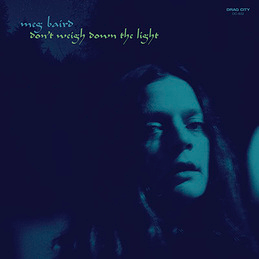
M: I know. [laughing] It’s pretty weird, right?
L: Was that a decision?
M: Bold moves, bold moves from the West Coast.
[laughing]
L: Yup!
M: That actually just kinda came about, like many things about the record, learning to just go with what’s working. Instead of having this idea of what needs to happen and then chasing that down.
L: Mm-hm.
M: There’s a woman named Pony, well it’s Rachael Pony Cassells, but everyone calls her Pony. She’s just a great person, really cool artist, awesome person all around. She was in town and took some photos for another project that she was working on, and that image was one of them. I was pressed for time looking for artwork, and I was wondering, “Should I start from scratch? Or this great person who’s a friend and an artist just took these photos; maybe I should just use them?” [laughs] I probably had to convince myself that… it’s pretty normal and totally OK to put your face on a record with your name and voice on it.
L: [laughs] I know what you mean.
M: So maybe I’ll just do it this time.
L: I thought it turned out really nice. Did you process that a lot, or did Dan O [at Drag City] work that out?
M: I did some basic processing with color and contrast, you know, just as a guideline. But Dan did all the processing. Yeah, it was a black-and-white image — Pony takes these really super-long exposures in darkness by streetlight and other low light.
L: Ohhh.
M: So her work always has that warm noir quality to it. That dark contrast, that’s her style, but I just kind of emphasized it. I didn’t want it black and white, so I went with the colors, and fussed over color a really long time. [laughs] I was like, “Is it too blue? Is it too green? Too Blue?” [Joni Mitchell] And then I added a second piece of night photography by another friend. Do you remember Melissa Farley?
L: Yeah! Totally.
M: Yeah. So that’s her work. She also works with really long exposures with artificial night lighting.
L: Oh, cool.
M: And I also liked how everything felt a little off even with this very beautiful image of hers — everything doesn’t feel quite right. You’re not sure why that light is on, and why those cars are there, even though it’s probably just people camping.
L: [laughs] Mm-hm.

M: It’s just very much how things feel here right now. I’m sure they feel that way everywhere, but… there’s a heightened sense of, “Where on earth are we going?”
L: [laughs] I think I feel that too.
M: And the river’s low. The river’s pretty in the photo, but the river’s low even for the season. And you can start to see the drought —
L: Oh yeah, the drought…
M: You know, there’s just things… but it’s still really beautiful. I just wanted it to not seem like an idealized, “everything’s awesome.”
L: Sunny — sunny California.
M: Yeah, I just don’t feel like that’s the thing to say right now. Definitely not “everything’s awesome.”
L: Mm-hm. So are you planning to do anything more with the Baird Sisters? Is there any music coming out?

M: We don’t have any plans, unfortunately. We’re living pretty far apart now, but anything can happen. It would be nice to get that Grapefruit Series record out again, actually…
[The Baird Sisters lp Until You Find Your Green was released in a very limited run as part of the Grapefruit Record Club in 2012.]
L: I love that record! That record’s amazing.
M: I love the Grapefruit release. That was amazing to do that, but it would be really fun to find an outlet so that it’s more available.
L: I think more people need to be able to get it, I agree.
M: Yeah, just make it more accessible, in general.
L: Mm-hm. So I’m assuming writing and recording with your sister is a totally different vibe. [laughs]
M: Yeah.
L: So what is that normally like? For that record in particular, I guess — the Grapefruit record.
M: The Grapefruit record, that was pretty fun. It’s not even how we’ve always necessarily worked in the past, but — when I work with Laura — it’s always very easy. The ESP factor can be kind of spooky when it’s siblings, you know. [laughs] It’s beyond even like, somebody that you’ve collaborated with a lot. It gets pretty spooky and we just… know. There were a couple of days where I was hanging out with her, and we just recorded our playing for hours, just sketches, sketches, jammy, jammy stuff. And some of it was good, but it was also like three CDs worth of just playing, you know… And then I was on tour by myself in Europe, which can be pretty lonely.
L: Oh god, I can imagine.
M: A lot of time by yourself.
L: On the train, right?
M: On the train. So I just culled through everything on that tour.
L: Ohhh.
M: And kind of narrowed it down, got a whole complete picture from those sketches. To the point where we just needed to add a couple things, like maybe Laura’s got a good traditional that she wants to throw on there, or a new song from a different space than what’s on the core sketches. So that was my tour fun, focusing in, and then we just worked together at her house, just layering it on…
L: So you went back and mixed it and you did overdubs?
M: No, we just started from scratch.
L: Oh!
M: We just used those pieces. I narrowed it down like, “We should use this snippet, make this into a song, make this into a song,” and so then we just shaped the songs, and then recorded it at home.
L: And it was just you two at home, right? Recording.
M: Mm-hm.
L: What did you use, an 8-track?
M: No, she just used her home digital setup. I don’t even know what that setup is. She did all the recording.
L: That’s awesome.
M: And then she did Glenn’s [Glenn Jones] record right after that. And I think she’s doing another one for him now too.
L: Ohh, I didn’t know she recorded other people.
M: Yeah. She doesn’t do it except for friends and special cases. It’s just something she can do. Laura’s very much one of these insanely multi-talented people, where you’re just like…oh!
[laughing]
M: And she can really work well with recording, and then you find out she has a background in electrical engineering —
L: Oh, she does? [laughs]
M: This is not a person with any fear or issues with conquering technology.
[laughing]
L: That’s cool.
M: And she’s got great ears. She used to have a Tascam 4-track way back. That’s just something she’s been doing for so long.
L: Yup.
M: Ever since that type of home recording stuff became really accessible, she’s been at it. But I can’t remember what our setup was. A simple setup with that lighter version of Pro Tools that’s cheaper I think. And we weren’t going crazy. We were just like, probably not more than six to eight tracks.
L: Yeah, yeah. That’s cool. So, did you guys record as kids? I know you must have played together your whole life.
M: Yeah. She’s a bit older than I am too, so I think I was probably in high school when the Tascam came around. So that was, yeah… We definitely did a lot with that.
There’s something about the sitting still. So much sitting still. It’s no good for your brain and your body.
L: Do you still have that stuff?
M: I’m sure. Laura’s a good — she’s a much better archivist than I am. I’m sure she has —
L: Recordings?
M: At least some record of the early stuff. Yeah, I can send you some cassette tapes too from the days when we used to have our folk-y sister duo project. We would just play open mics around the greater Princeton area.
L: Oh wow. [laughs]
M: You know, it was just that funny “desktop publishing” time where people were like, “Oh I can print out a little tray for my cassettes.” So professional.
[laughing]
L: Yup.
M: So there’s some of those around.
L: So you made your own tapes and stuff?
M: Mm-hm.
L: Oh, wow.
M: There’s tapes that were available on the open mic circuit of the greater Princeton area.
L: That’s awesome.
M: In the 90s. [laughing]
L: Russ would probably love to see those.
M: Yeah, I’ll have to find some of those. I don’t have them with me now, but I know that there’s some around somewhere.
L: That’s cool.
M: I think that was part of the reason I got so excited about that Matthew Young stuff that came out —
L: Oh yeah, totally.
M: Those reissues that Drag City did.
L: Mm-hm.
M: I love picturing how he was right there. Right around the same time. Just living in Hopewell, NJ.
More about: Blues Control, Lea Cho, Meg Baird